Behaviour & Training
Positive Reinforcement Crate Training
A 15–20 minute foundation skills guide to teaching dogs to view their crate as a safe and comfortable space using positive reinforcement.
Behaviour & Training
Registered Charity #1188407
Behaviour & Training
A 15–20 minute foundation skills guide to teaching dogs to view their crate as a safe and comfortable space using positive reinforcement.
Reader
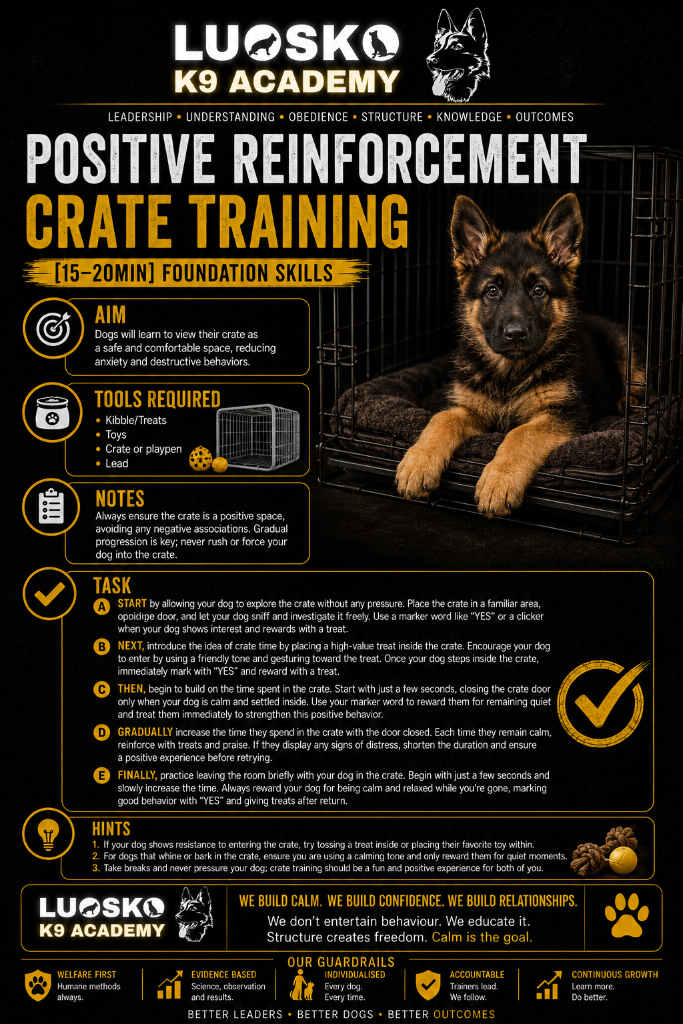
POSITIVE REINFORCEMENT CRATE TRAINING [15–20 MIN] FOUNDATION SKILLS
AIM: Dogs will learn to view their crate as a safe and comfortable space, reducing anxiety and destructive behaviours.
TOOLS REQUIRED: Kibble/Treats, Toys, Crate or playpen, Lead.
NOTES: Always ensure the crate is a positive space, avoiding any negative associations. Gradual progression is key; never rush or force your dog into the crate.
TASK A. START: Allow your dog to explore the crate without any pressure. Place the crate in a familiar area, open the door, and let your dog sniff and investigate freely. Use a marker word like 'YES' or a clicker when your dog shows interest and reward with a treat.
B. NEXT: Introduce the idea of crate time by placing a high-value treat inside the crate. Encourage your dog to enter by using a friendly tone and gesturing toward the treat. Once your dog steps inside, immediately mark with 'YES' and reward with a treat.
C. THEN: Begin to build on the time spent in the crate. Start with just a few seconds, closing the crate door only when your dog is calm and settled inside. Use your marker word to reward them for remaining quiet and treat immediately to strengthen this positive behaviour.
D. GRADUALLY: Increase the time they spend in the crate with the door closed. Each time they remain calm, reinforce with treats and praise. If they display any signs of distress, shorten the duration and ensure a positive experience before retrying.
E. FINALLY: Practice leaving the room briefly with your dog in the crate. Begin with just a few seconds and slowly increase the time. Always reward your dog for being calm and relaxed while you're gone, marking good behaviour with 'YES' and giving treats after return.
HINTS
WE BUILD CALM. WE BUILD CONFIDENCE. WE BUILD RELATIONSHIPS. We don't entertain behaviour. We educate it. Structure creates freedom. Calm is the goal.
Behaviour & Training
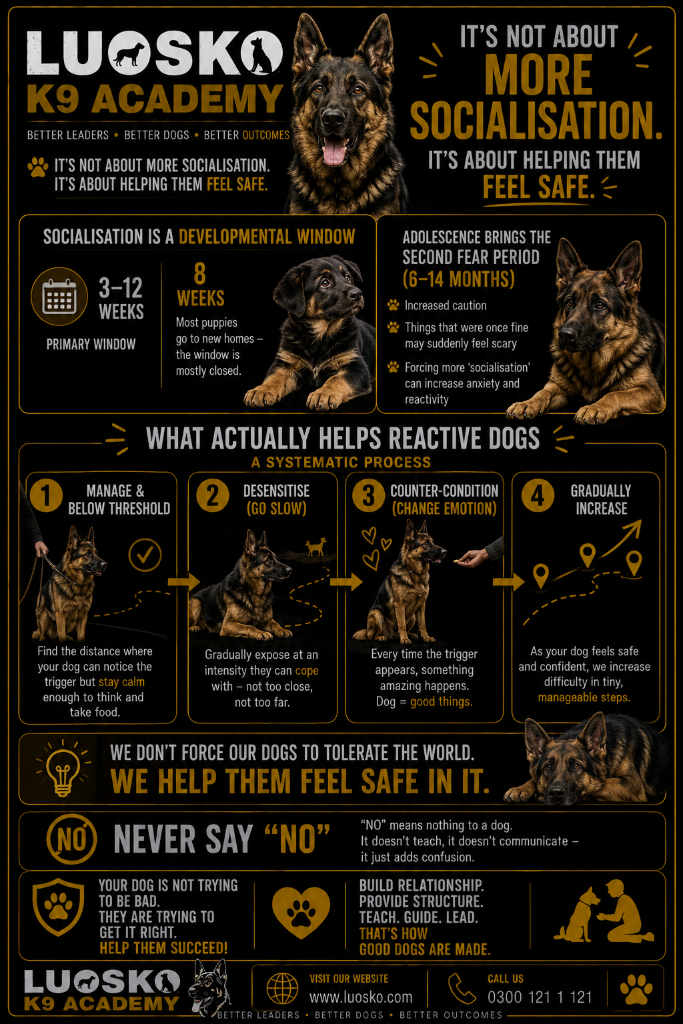
It's not about more socialisation — it's about helping your dog feel safe. A systematic process for reactive dogs.
5 minute read
View Guide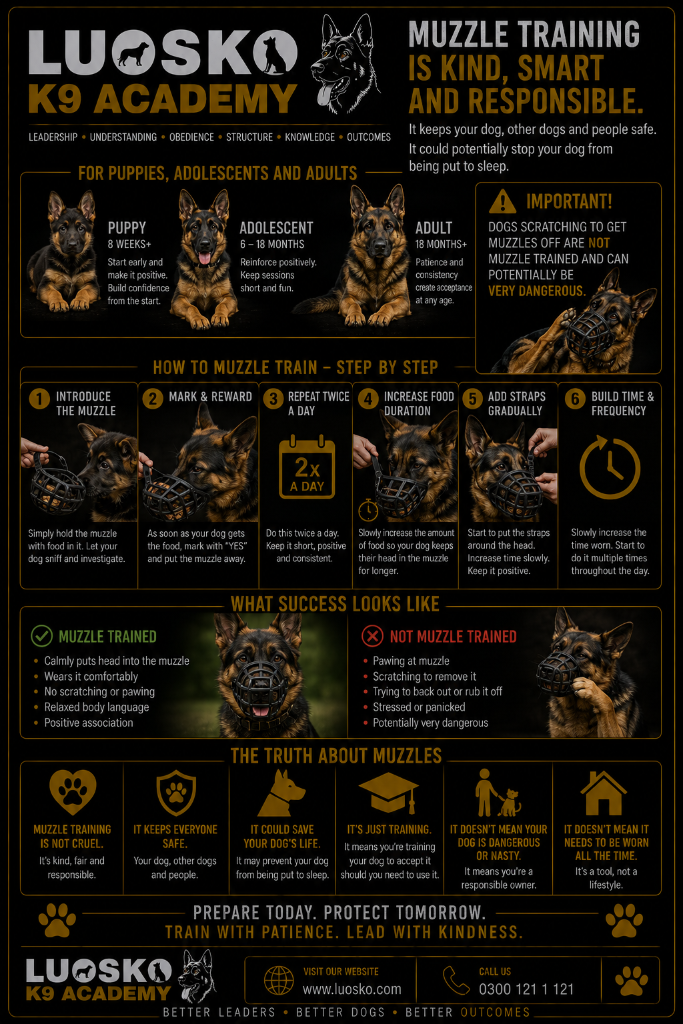
Behaviour & Training
Muzzle training is kind, smart and responsible. It keeps your dog, other dogs and people safe. It could potentially save your dog's life.
6 minute read
View Guide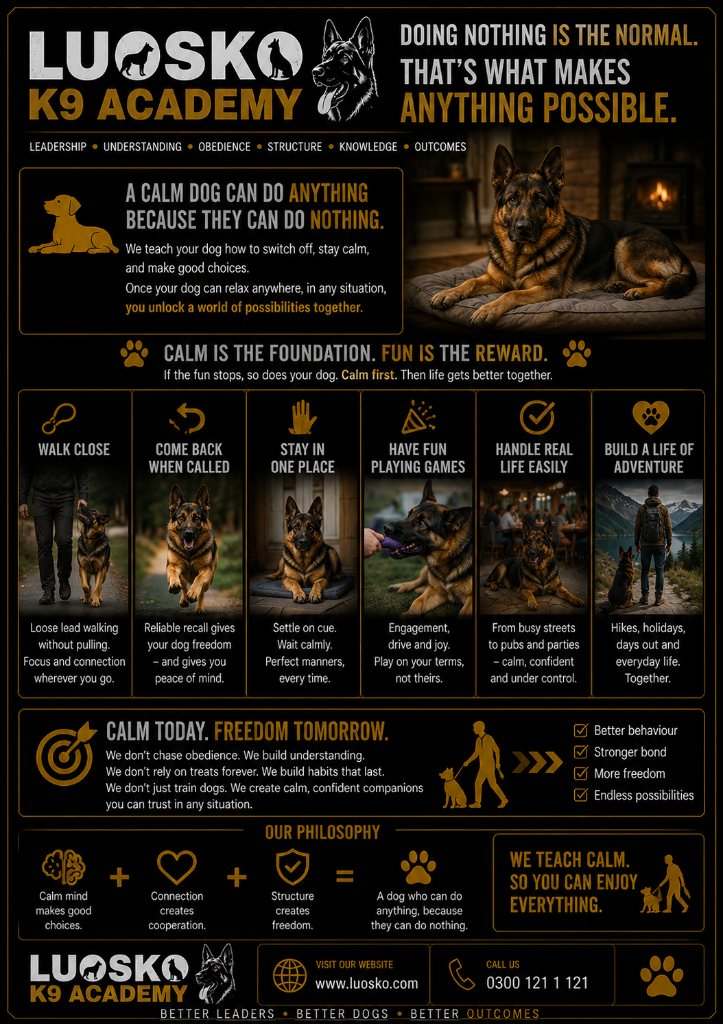
Behaviour & Training
A calm dog can do anything because they can do nothing. We teach your dog how to switch off, stay calm, and make good choices.
5 minute read
View GuideLUOSKO Guide
Behaviour & Training
A 15–20 minute foundation skills guide to teaching dogs to view their crate as a safe and comfortable space using positive reinforcement.
POSITIVE REINFORCEMENT CRATE TRAINING [15–20 MIN] FOUNDATION SKILLS
AIM: Dogs will learn to view their crate as a safe and comfortable space, reducing anxiety and destructive behaviours.
TOOLS REQUIRED: Kibble/Treats, Toys, Crate or playpen, Lead.
NOTES: Always ensure the crate is a positive space, avoiding any negative associations. Gradual progression is key; never rush or force your dog into the crate.
TASK A. START: Allow your dog to explore the crate without any pressure. Place the crate in a familiar area, open the door, and let your dog sniff and investigate freely. Use a marker word like 'YES' or a clicker when your dog shows interest and reward with a treat.
B. NEXT: Introduce the idea of crate time by placing a high-value treat inside the crate. Encourage your dog to enter by using a friendly tone and gesturing toward the treat. Once your dog steps inside, immediately mark with 'YES' and reward with a treat.
C. THEN: Begin to build on the time spent in the crate. Start with just a few seconds, closing the crate door only when your dog is calm and settled inside. Use your marker word to reward them for remaining quiet and treat immediately to strengthen this positive behaviour.
D. GRADUALLY: Increase the time they spend in the crate with the door closed. Each time they remain calm, reinforce with treats and praise. If they display any signs of distress, shorten the duration and ensure a positive experience before retrying.
E. FINALLY: Practice leaving the room briefly with your dog in the crate. Begin with just a few seconds and slowly increase the time. Always reward your dog for being calm and relaxed while you're gone, marking good behaviour with 'YES' and giving treats after return.
HINTS
WE BUILD CALM. WE BUILD CONFIDENCE. WE BUILD RELATIONSHIPS. We don't entertain behaviour. We educate it. Structure creates freedom. Calm is the goal.
We use strictly necessary storage to run this website. We only use analytics and donation tools if you allow us to. You can accept, reject, or choose — rejecting is as easy as accepting. Read the cookie information.